Equestrian Lighting

EQUESTRIAN LIGHTING
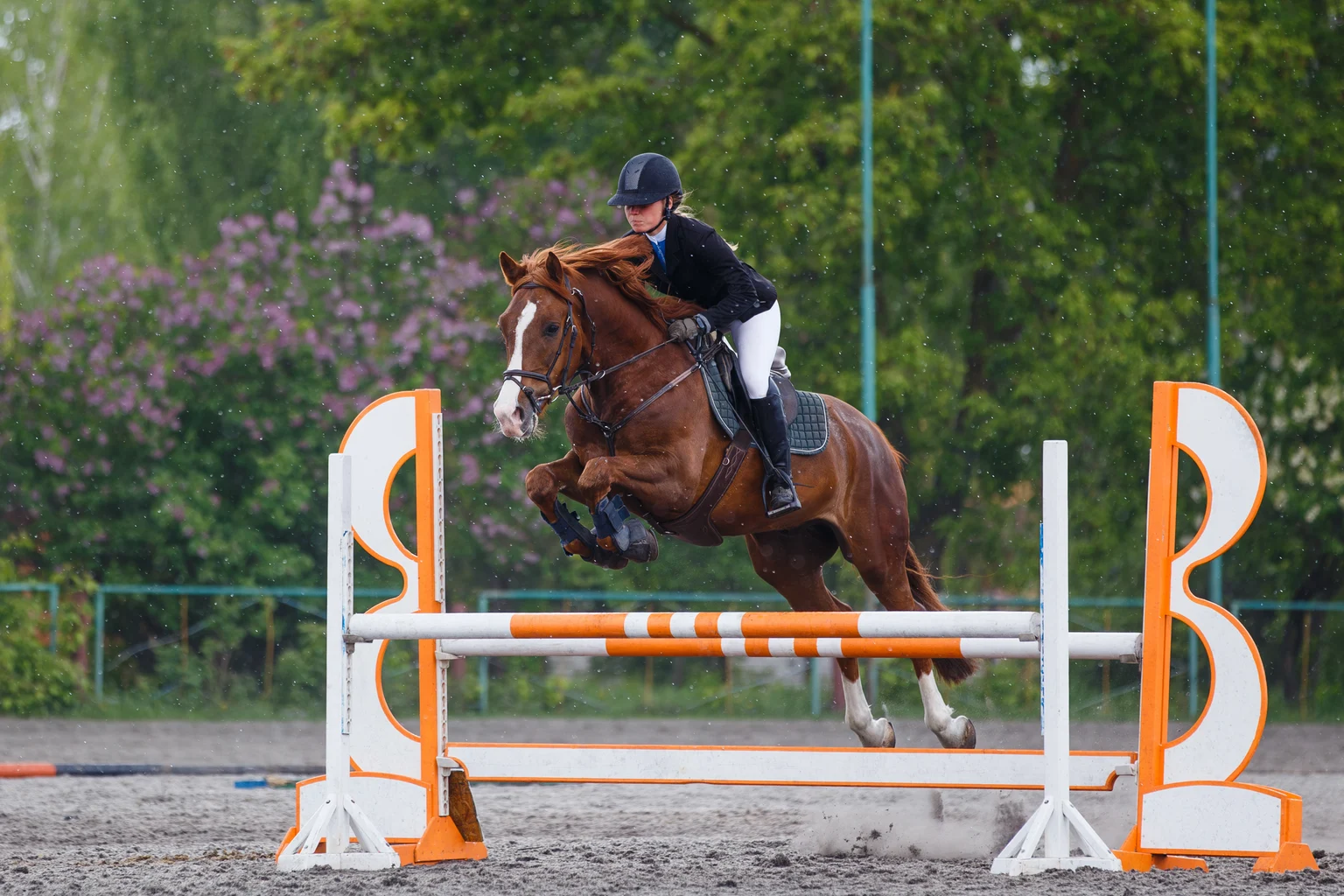
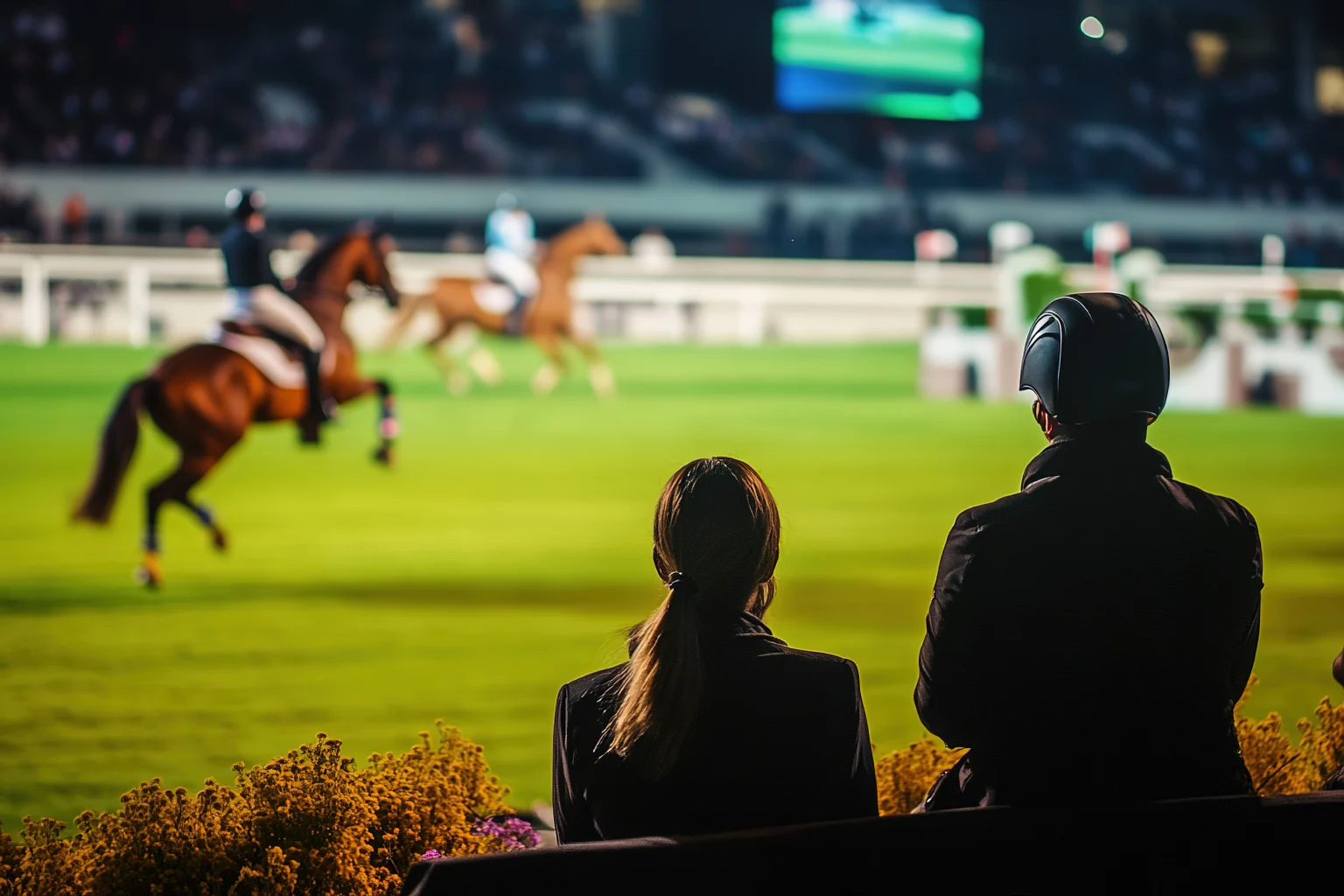
It’s a great feeling to be synchronised with a horse, and perfect harmony is what’s needed for riders to compete in equestrian sports, at all levels. From a gentle trot around the paddock to the absolute precision required for dressage and showjumping, human and horse together can create an exciting event to watch or participate in.
Whatever version of the sport, it is paramount to consider the welfare of both horse and rider in terms of comfort and wellbeing. Lighting can be a source of discomfort if not applied correctly and Thorn are here to advice and work alongside you.
A fine balancing act
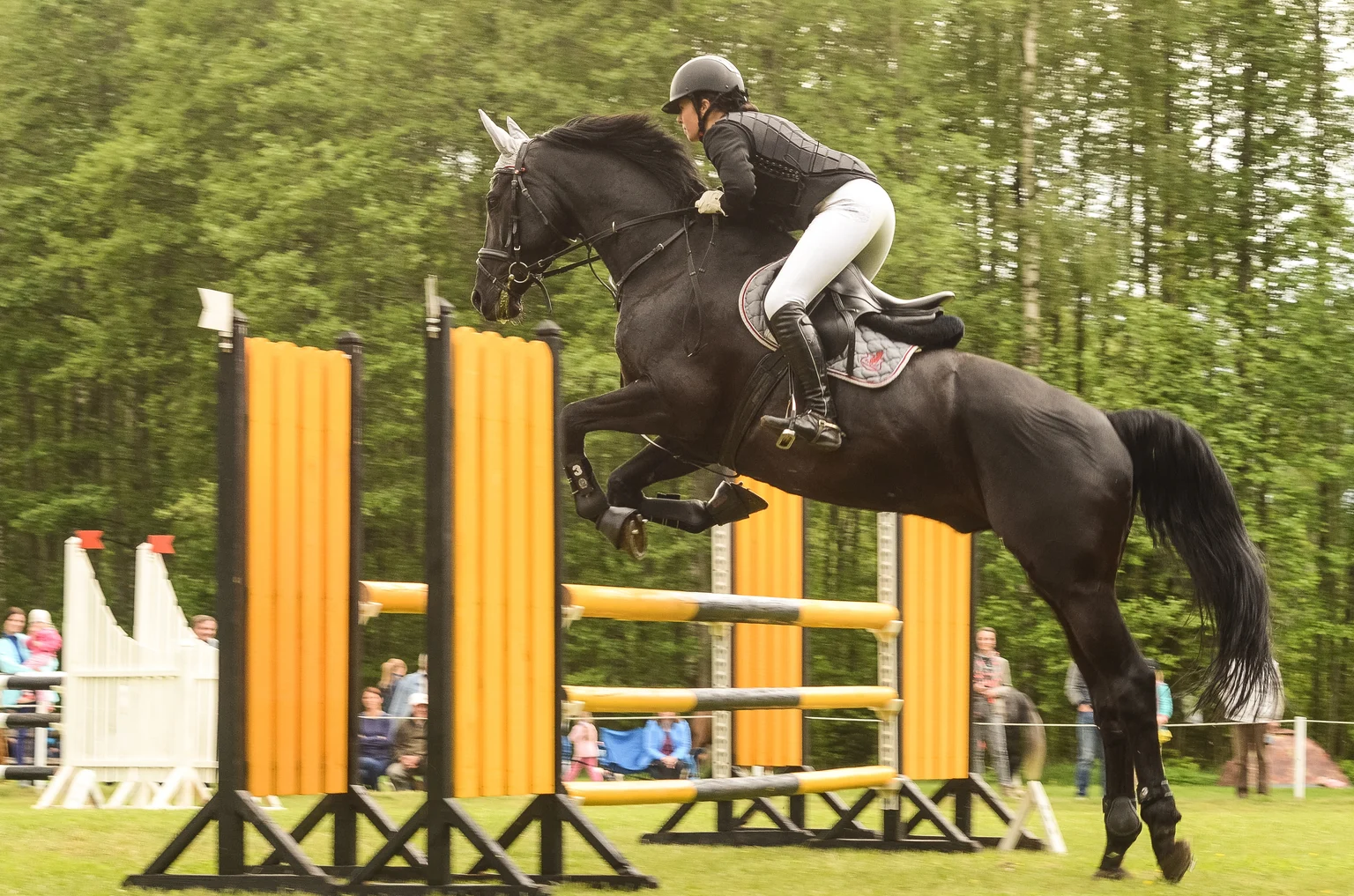
Major equestrian events are normally held in large stadia or indoor arenas, usually equipped with facilities for television broadcasting. The Olympic Games are the pinnacle of these competitions and include jumping, dressage and eventing.
Jumping is a mixture of courage and technical ability, dressage a balance between dedicated training and elegance, whereas eventing combines both of these over a cross-country course.
There are many other equestrian disciplines, including endurance, racing and polo. Something in common is the need to train, exercise and warm-up the horses, as well as the riders. For these activities, paddocks are simple areas, typically 25 x 65 m with a fenced boundary around soft ground.
Most purpose-built arenas are rectangular in design, although the overall dimensions may vary considerably. The smallest arena size suitable for dressage tests is 30 x 70 m, while a full showjumping ground will require a minimum of 55 x 110 metres. It is important to consider the height of the horse and that the rider may be 2.5 m above ground level.

CREATING A CLEAR AND COMFORTABLE VIEW
Consideration should be given to the safety of both horse and rider with good lighting and uniformity across the space. Spectators, support teams and judges should have a clear view of the action without experiencing glare from the lighting.
One of the main objectives of equestrian lighting is for the horses and riders to have good vision without experiencing discomfort or disability glare. Lighting from two or more sides is best practice, to avoid unnatural shadows and to balance the light. A horse’s iris opens slower than in humans, so high uniformities are imperative, avoiding glare to the horse, making it easier to judge the challenges ahead. Each project may have different requirements, which should be confirmed before starting a design.
Key considerations include appropriate horizontal and vertical illuminance with good uniformity of competition areas, free of shadows. Good glare control to allow riders to concentrate on the sport, without any discomfort.
Also considering the colour temperature and colour quality to suit the space is key. Typically, between 3000 K and 5000 K with a CRI over 70 for outdoors and CRI 80 indoors. Where required, HD TV requires high TLCI (Television Lighting Consistency Index) and a very low flicker factor to enable a high rate of frames per second (FPS) to enable super slow motion ‘freeze frames’ to be taken.
Protecting the night sky
For outdoor installations, spill light should be controlled to avoid light trespass and upward light managed to prevent sky glow (Limiting the effects of obtrusive light – CIE 150: 2017).
Environmental zones should be considered with respect for adjacent properties and careful positioning of lighting columns to limit the view of the lighting from properties. Consideration should also be given to the natural environment and animal habitats.
The use of controls (switching or dimming for different light levels) can ultimately reduce energy, cost whilst only lighting what is needed when it's needed - further assisting dark sky protection.
LED Technology in Sports Floodlighting
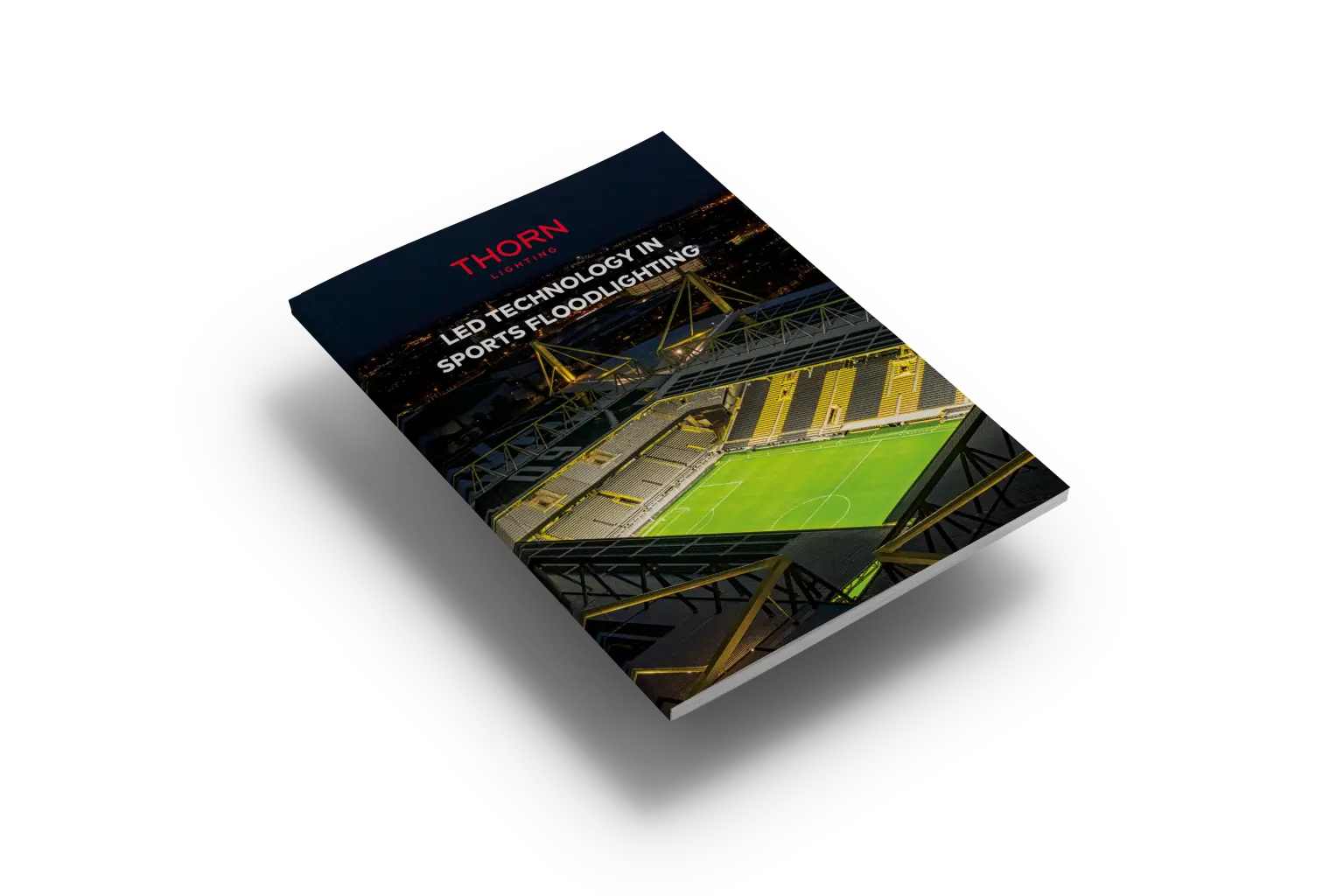
Whether it’s a recreational sports hall or a world-class stadium, there are number of factors to consider in order to understand the project requirements and get the lighting scheme right. The LED Technology in Sports Floodlighting whitepaper explores the key considerations for floodlighting for sports applications, giving you a guide to luminaire construction, understanding LED colour properties, taking site measurements, commissioning and more.