Athletics LIGHTING

SPORTS LIGHTING
ATHLETICS LIGHTING
From Ancient Beginnings
Athletics may take place indoors or outdoors, sometimes in purpose-built venues but often in facilities designed to accommodate other sports.
When it comes to lighting athletics facilities, the athlete should be front of mind. From ensuring the right light for the bent over blocks, the 400 m hurdles through to the spectators in the stands or even at home watching the TV. The details, the equipment, the environment: everything must be sharp and clear, ensuring a safe and comfortable experience.
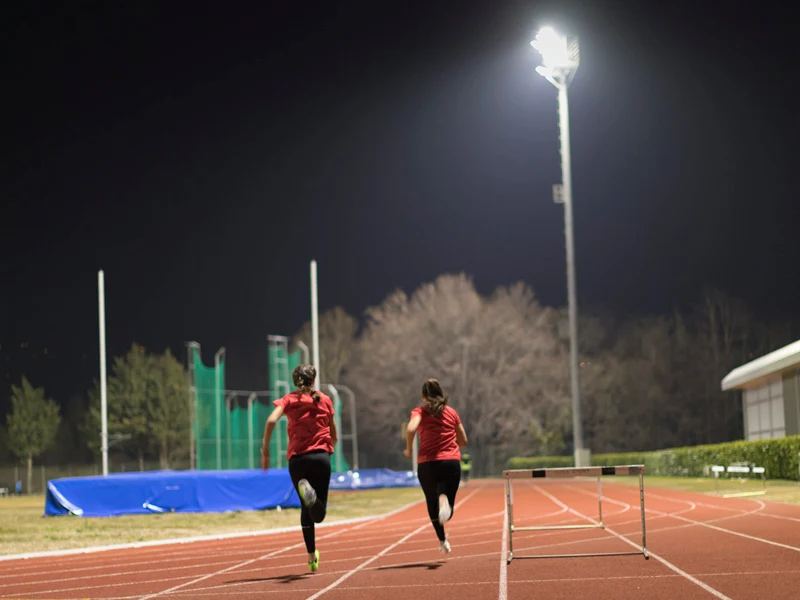
LIGHTING A MULTI USE SPACE
Athletics may take place indoors or outdoors, sometimes in purpose-built venues but often in facilities designed to accommodate other sports. For outdoor venues, a typical layout may have a running track around the outside with a central field in the middle area. This central area may be used for a single large field sport such as football or permanently arranged for athletics events.
Thus its important that the lighting considers the multiple uses of such a space for various sports are accounted for in the lighting design process. Generally, horizontal illuminance with good uniformity is sufficient. However, there are exceptions. For example – in high jump, particular care is needed to avoid glare to the participants.
Each project may have different requirements, which should be confirmed before starting a design.

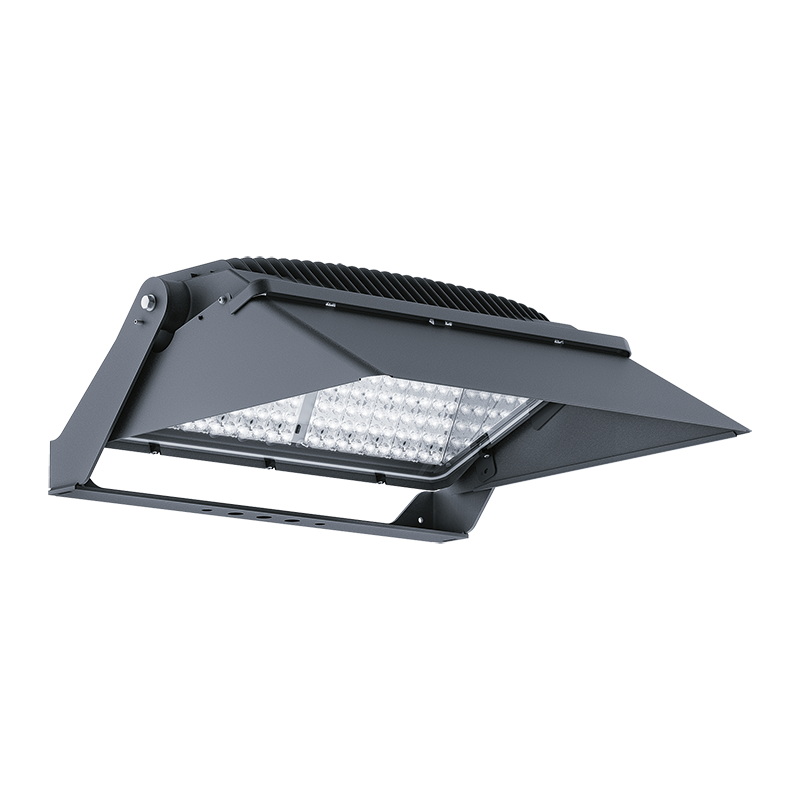
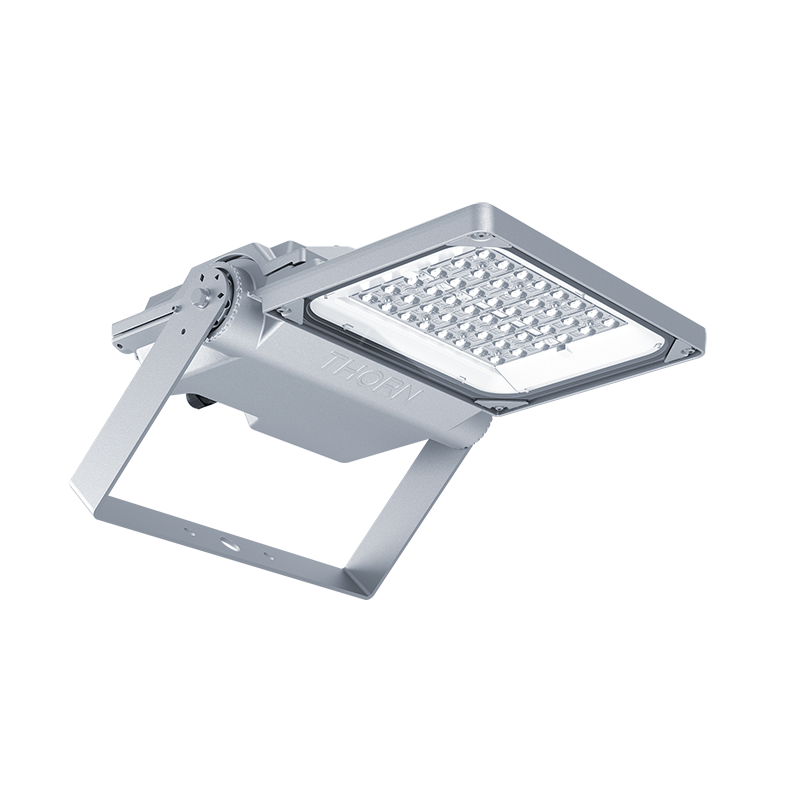
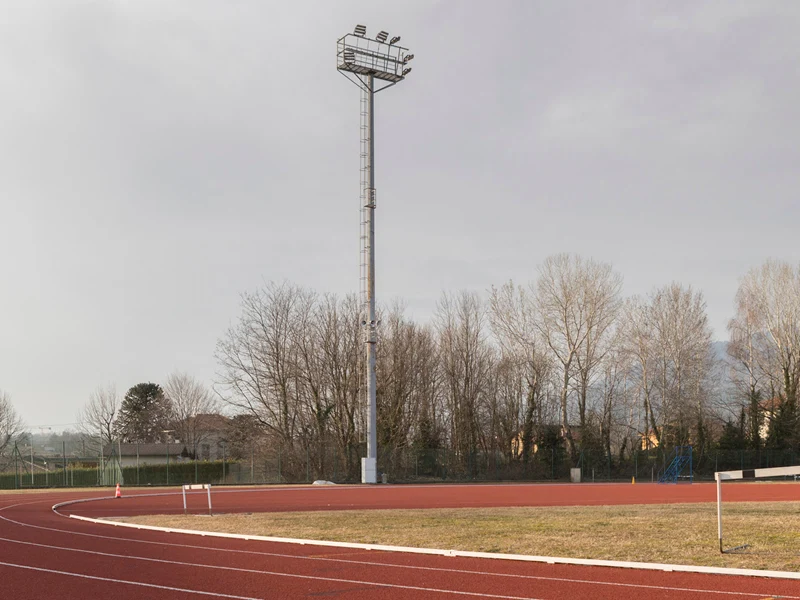
KEY LIGHTING CONSIDERATIONS
For lighting an athletics track and space, firstly consider appropriate horizontal and vertical illuminance, with good uniformity in the competition area, free of shadows.
Good glare control to allow athletes to concentrate on the sport, without any discomfort. Colour temperature and colour quality to suit the space is also key and typically, between 3000 K and 5000 K with a CRI over 70 for outdoors and CRI 80 indoors is advised.
When it comes to TV broadcasting, a high TLCI (Television Lighting Consistency Index) and a very low flicker factor to enable a high rate of frames per second (FPS) to enable super slow motion ‘freeze frames’ to be taken.
For outdoor installations, spill light should be controlled to avoid light trespass and upward light managed to prevent sky glow (Limiting the effects of obtrusive light – CIE 150:2017). The implementation of lighting controls can also ensure that the lighting only lights what is needed, when it is needed. This also assists with reducing energy costs as a result.
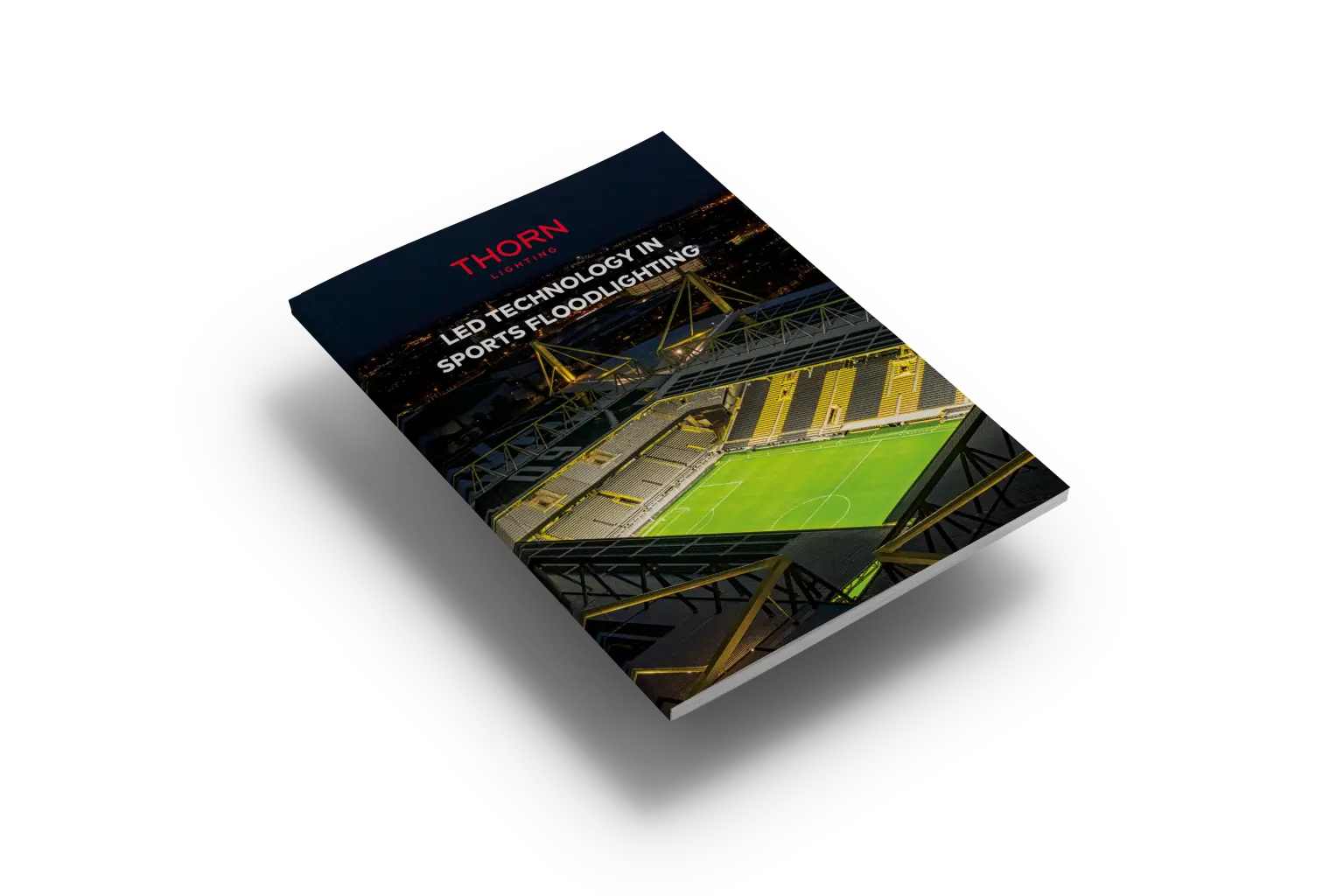
LED Technology in Sports Floodlighting
Whether it’s a recreational sports hall or a world-class stadium, there are number of factors to consider in order to understand the project requirements and get the lighting scheme right. The LED Technology in Sports Floodlighting whitepaper explores the key considerations for floodlighting for sports applications, giving you a guide to luminaire construction, understanding LED colour properties, taking site measurements, commissioning and more.